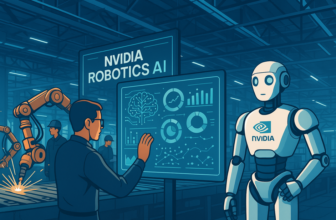
Grok-Optimus Integration Reshaping Factory Economics for Small Manufacturers
The convergence of artificial intelligence and humanoid robotics has moved from prototype stage to production reality. Tesla deployed over 1,000 Optimus Gen 3 robots across its manufacturing facilities by January 2026, marking the largest-scale humanoid robot deployment in manufacturing history.
These units currently handle tasks like parts processing and component kitting—work previously performed by human employees. The deployment represents more than an operational shift for Tesla. It signals an economic turning point for manufacturers of all sizes as the cost structure of factory labor enters a period of fundamental change.
Tesla’s $2 billion investment in xAI demonstrates commercial confidence in the underlying technology. The company targets production of 1 million Optimus units annually by late 2026, with manufacturing costs dropping to approximately $20,000 per unit.
That figure compares to industry norms of $50,000 to $250,000 per humanoid robot just two years earlier. The price compression creates an economic threshold where small and mid-size manufacturers can realistically evaluate robotics as an alternative to traditional labor costs.
How Grok Changes What Factory Robots Can Do
Grok integration enables Optimus V3 units to process natural language, follow verbal instructions, and interact with human workers in ways that earlier generations of industrial robots could not.
The distinction matters because it transforms robots from pre-programmed autonomous systems into collaborative partners that adapt to context. Tesla’s “Physical AI” approach treats factory work like road navigation, with Grok handling real-time problem-solving rather than executing fixed sequences.
The same neural networks powering Tesla’s Autopilot and Full Self-Driving systems now operate on factory floors. Training time for new actions compressed from 48 hours to 2.5 hours through simulation-to-real technology, with voice-command completion rates exceeding 95 percent.
The proven Grok deployment in Tesla vehicles demonstrates reliability for industrial applications, enabling robots to:
- Handle nuanced requests
- Ask clarifying questions
- Adjust to environmental changes beyond physical dexterity alone
Labor Cost Shifts Hitting Manufacturing Operations
A 50-person assembly operation faces different economics when humanoid robots priced at $20,000 per unit can work 24-hour shifts without fatigue, overtime, or benefits. The immediate question for small manufacturers centers on operational costs rather than technological novelty.
Optimus units currently working unassisted in Tesla factories:
- Sort and organize components
- Prepare assembly kits
- Perform quality control tasks that previously required human attention across multiple shifts
The displacement concern is real, but the economic calculation involves more than simple headcount reduction. Manufacturers redeploy staff to higher-value tasks when robots handle repetitive work, creating a hybrid model where human judgment combines with robotic consistency.
A realistic assessment shows that integration costs, facility modifications, and workflow redesign add significant upfront expenses before any labor savings materialize. The payback period varies by operation, but manufacturers evaluating the technology typically model a two-to-three-year timeline before seeing net cost reductions.
Where the Technology Fits Beyond Assembly Lines
Warehouse operations, packaging, quality inspection, and material handling present immediate applications for Grok-equipped humanoids outside traditional assembly work. The conversational AI handles adaptive tasks that fixed-position robots cannot address, such as:
- Locating misplaced inventory
- Responding to changed shipping priorities
- Adjusting to variable packaging requirements
ABI Research expects global humanoid robot shipments to exceed 150,000 units annually by 2028, with 2026 identified as an inflection year as automation budgets respond to supply-chain pressures.
The technology scales differently for a 20-person shop versus a 200-person manufacturer:
- Smaller operations may find the upfront investment prohibitive until lease or robot-as-a-service models become widely available.
- Larger facilities can spread integration costs across multiple units and achieve faster returns through higher utilization rates.
The proven reliability of Grok chatbot functionality in consumer vehicles provides evidence that the underlying AI can handle industrial environments without constant technical support.
Strategic Positioning for Manufacturing Leaders
Manufacturers should monitor pilot programs beyond Tesla’s own facilities as third-party deployments begin. The evaluation process starts with identifying labor-intensive processes where:
- Task repetition is high
- Shift coverage is difficult or costly
- Quality consistency creates ongoing operational challenges
Conversations with equipment providers now focus on compatibility with existing production systems rather than future capabilities. The question is not whether this technology will affect manufacturing economics, but which operations benefit most from early adoption.
Strategic planning requires assessing whether hybrid human-robot workflows fit specific manufacturing requirements. Some operations demand the flexibility and judgment that human workers provide, while others suffer from the variability that humanoid robots eliminate.
The economic advantage appears clearest in facilities where:
- Labor shortages are persistent
- Shift-differential costs are significant
- Quality-control failures create measurable operational pain
Early adopters will likely gain competitive advantages through efficiency improvements that competitors cannot match with traditional labor models alone.

Picture this: It's 11 PM on Sunday night, and you're
Read more

Key Takeaways: Payroll software automatically deals with taxes, direct deposits
Read more
Over 1.1 million U.S. workers lost their jobs in recent
Read more
Tom Hardy's dedicated global fanbase proves that direct communication channels
Read more